
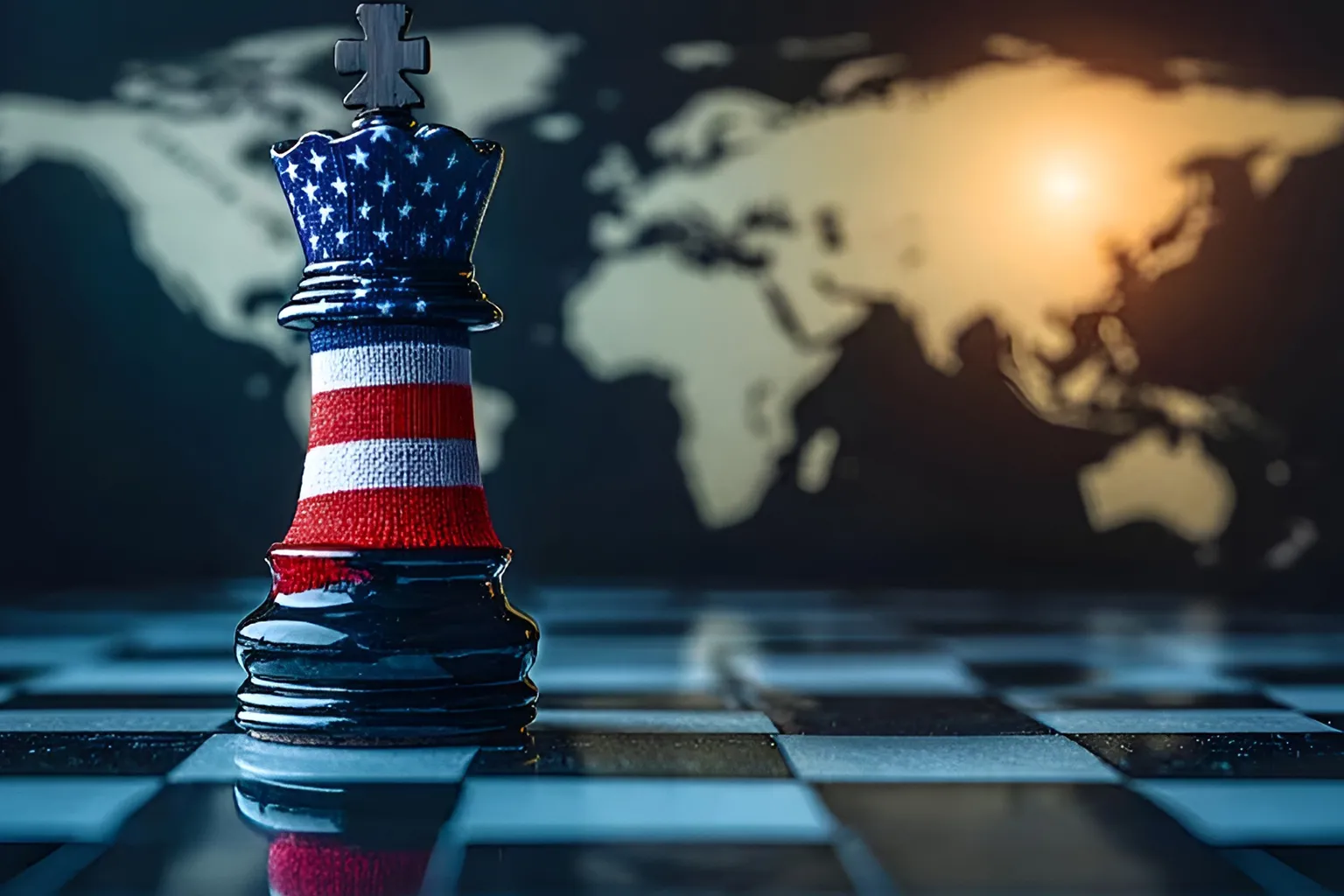
The global business environment today is defined by one word: uncertainty.
Conflicts, shifting alliances, trade restrictions, and political volatility have quietly rewritten the rules of international growth. What looked like a stable corridor three years ago now carries friction. What seemed like a reliable partner now demands renegotiation. Tariffs have moved sixfold across several major trade routes, supply chains have been redrawn, and capital has grown visibly cautious about where it travels next.
For Indian businesses looking outward, this has changed the nature of the decision itself. The question is no longer where to expand – it is where expansion still holds its value over time. For Indian businesses, US business expansion remains the one growth decision that continues to hold value, even as other corridors turn uncertain.
And in this recalibrated world, one market continues to stand apart – the United States.
The Illusion of Safe Markets Is Fading
For years, global expansion followed a familiar script. Businesses diversified across developed and emerging markets, hedged across regions, and treated geography as a menu of options. That script no longer reads the way it used to.
Several long-trusted markets are turning inward. Regulatory walls are rising. Political cycles are disrupting investment climates. Even economies once considered low-risk are now subject to sudden policy reversals that can stall operations overnight.
The idea of a safe market has quietly been replaced by the idea of a resilient one.
Resilience is no longer a soft consideration. It is the first filter through which every serious expansion decision now passes.
The United States: Stability Backed by Structure
While much of the world has spent the last few years absorbing shocks, the US has spent them absorbing capital. In 2025 alone, the country received roughly 288 billion dollars in foreign direct investment – the largest share of any economy in the world.
This is not a moment. It is a pattern. Over the past decade, the US share of global inward foreign investment has climbed from around 21 percent to 31 percent, even as other established economies have seen their share decline.
The reasons are structural, not sentimental:
- Deep, transparent capital markets that reward long-term building
- A legal system that protects contracts, intellectual property, and ownership
- A consumer base of scale that few markets can genuinely rival
- Institutional continuity that holds across political cycles
- An innovation ecosystem that still sets the global pace
It is not accidental. It is structural.
When capital is uncertain, it moves toward structure. The US continues to be where structure lives. This is exactly why US business expansion keeps accelerating even as other corridors slow down.
The Real Differentiator: How You Enter Matters
Here is where most Indian businesses get the conversation wrong. They treat entering the US as a destination decision. It is actually a design decision.
A presence in the US is not the same as a position in the US. A presence can be arranged in weeks. A position takes intent. It involves the right entity structure, the right state of incorporation, the right tax posture, the right banking and compliance rails, and a clear view of how capital, revenue, and operations will move across the India–US corridor.
Done well, this unlocks credibility with American clients, access to US capital, and a platform for scale. Done casually, it creates friction that compounds for years – with tax exposure, compliance gaps, and structures that become expensive to unwind.
The US rewards those who enter with intent. It punishes those who enter by default.
Why This Moment Favors Indian Businesses
For Indian founders and boards, US business expansion is no longer a question of ambition – it is a question of design. The present environment is unusually well-suited to building a serious US footprint.
Indian enterprise has matured. The operating discipline, technical depth, and global ambition now available from India are of a quality that was rare a decade ago. At the same time, the US is actively looking for partners it can depend on – in technology, services, manufacturing support, and engineering capability. The alignment is real, and it is visible in the flow of contracts, partnerships, and investment moving through the corridor.
The opportunity is not simply to sell into the US. It is to build within it – to be recognised as a participant in its economy, not merely a supplier to it.
That distinction is what separates businesses that trade with the US from businesses that scale because of it.
The Direction Is Clear
Global expansion is no longer a question of ambition. It is a question of judgment.
In a world where markets are being reshaped by forces outside any single company’s control, the value of a market lies in what it can still be counted on to deliver – rule of law, access to capital, access to demand, and the institutional memory to honour both. Few markets offer this combination. One offers it at a scale that no other can match.
For Indian businesses ready to expand with intent, the US is not one option among many. It is the option that still works when others begin to falter. That is why US business expansion is no longer optional planning – it is the decision that determines long-term scale.
The direction is clear. What matters now is the design.
Frequently Asked Questions
Why is the US still considered the best market for Indian business expansion in 2026?
US business expansion remains strong for Indian companies in 2026 because the US continues to attract the largest share of global FDI, backed by deep capital markets, strong IP and contract protections, and institutional continuity.
What’s the difference between having a “presence” and a “position” in the US?
A presence is just registering an entity. A position means the right state of incorporation, tax structure, banking rails, and compliance setup – designed so the business can scale, not just exist.
How long does it take to legally set up a business in the US from India?
A basic entity can be formed in a few weeks, but building a compliant, tax-efficient structure that supports long-term operations takes proper planning around entity type, state selection, and cross-border tax posture.
What risks do Indian businesses face if they enter the US market without proper structuring?
Casual entry often leads to tax exposure, compliance gaps, and structures that are costly to unwind later – issues that could have been avoided with the right setup from day one.
Which Indian industries are best positioned to expand into the US right now?
Sectors like technology, IT/SaaS, manufacturing support, and engineering services are seeing strong alignment with US demand, given the maturity and technical depth Indian enterprises now offer.
How does Indam Advisors help Indian businesses expand into the US?
Indam Advisors works end-to-end – entity formation, Virtual CFO support, tax and FEMA/RBI compliance – to help Indian businesses enter the US market with intent rather than by default.
Ready to Move From a US Presence to a US Position?
At Indam Advisors, we help Indian businesses design the entity structure, tax posture, and compliance foundation that turns market entry into long-term market position.